The first sight of a crowned crane is enough to make anyone stop in awe. It carries itself with regal poise, every movement graceful and intentional, while its radiant golden crest gleams beneath the African sunlight. Scientifically called the Grey Crowned Crane (Balearica regulorum), this magnificent bird embodies the very essence of grace and majesty across Africa’s untamed plains.
Unlike many other birds, this species doesn’t rely on bright colors to impress. Instead, it carries an understated majesty, smooth grey plumage, a poised stance, and that striking crest of golden feathers that sets it apart from every other creature on the savanna.
What Makes the Crowned Crane Unique?

Let’s take a closer look at what makes this species so fascinating.
The Crown
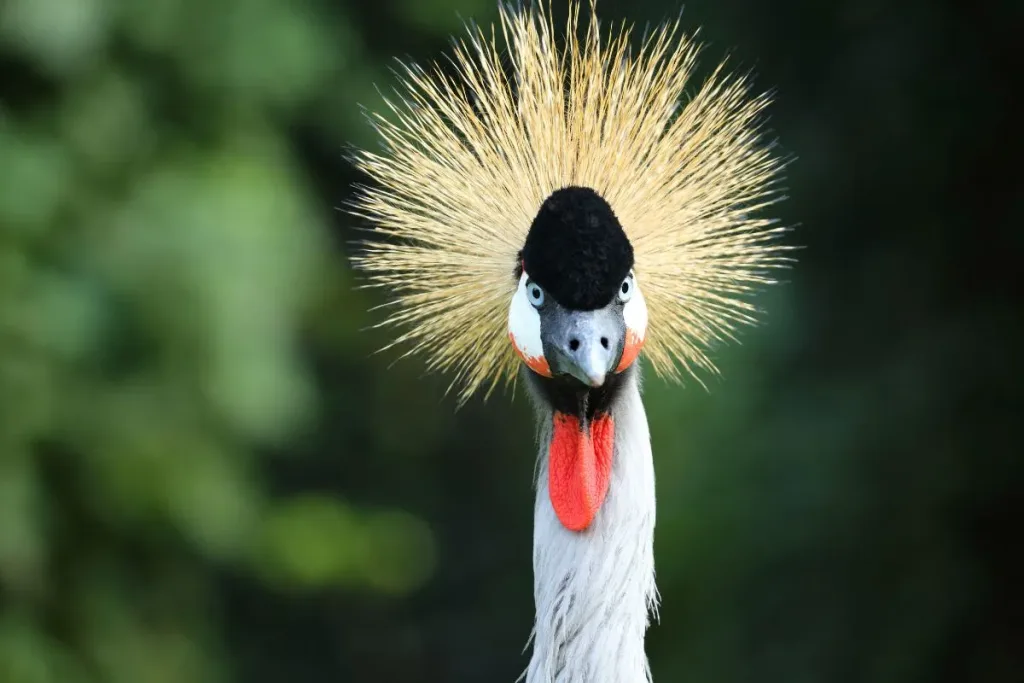
The first thing you notice is, of course, the crown itself. A perfect circle of stiff, straw-like golden feathers stands proudly atop its head, radiating light from every angle. Unlike the soft plumes of other birds, these feathers are fine and bristled, forming a dazzling sunburst.
Both males and females wear this crown, it’s not a sign of dominance or gender but a shared mark of beauty.
While it may appear purely decorative, the crown also conveys information through visual signals. When cranes dance or bow, the light catching those golden strands becomes part of the display, amplifying their presence to mates and rivals alike.
Plumage
Beyond the crown, the rest of its plumage carries a palette of refinement. Its body is draped in a sleek layer of pearl-grey feathers, accented by white, black, and buff patches on its wings. The rear plumage often shows warm golden or chestnut tones that shimmer in the sun.
When it spreads its wings (spanning nearly two meters), the blend of colors becomes breathtaking. Every flap feels deliberate, as though the bird is aware of its own elegance.
Facial Features
Move closer and you’ll notice its unmistakable face: a combination of contrasts that seem painted by a master artist.
A large white cheek patch stands out against velvety black feathers. Below it, a vivid red gular sac, an inflatable pouch under its throat, helps project deep, honking calls that can be heard across open plains.
Its eyes, pale blue or grey, give it an intelligent, calm expression. Combined with the golden crown, the face of the Grey Crowned Crane carries both authority and grace, a look that feels genuinely regal.
Size and Stature
Standing about one meter tall and weighing around three to four kilograms, this bird commands attention wherever it goes. Its long legs and slender neck give it a dancer’s posture, balanced, upright, and always graceful.
Unlike the majority of crane species, the Gray Crowned Crane has the remarkable ability to sleep in trees. This is possible thanks to its elongated hind toe.
As dusk settles, it gracefully perches on tree branches, resting above the damp earth while its shimmering golden crest stands out against the fading light of the evening sky.
Grey vs. Black Crowned Crane
People often confuse the Grey Crowned Crane with its cousin, the Black Crowned Crane (Balearica pavonina).
They look similar, but a few key differences set them apart.
- The Gray Crowned Crane features pale gray feathers, striking white cheeks, and a vivid crimson throat pouch.
- In contrast, the Black Crowned Crane displays deeper-toned plumage and a darker face, with only small patches of white near the cheeks.
- The gray species primarily inhabits eastern and southern regions of Africa, whereas the black variant thrives across the western and central parts of the continent.
Both are breathtaking in their beauty, yet the gray crane embodies a softer elegance. Its hues are calm and luminous, reminiscent of a regal cloak woven from sunlight and morning mist.
Where Do Crowned Cranes Live?

The Grey Crowned Crane’s home is as diverse as its beauty. You’ll find it across Eastern and Southern Africa, from Uganda and Kenya down to Zambia, Mozambique, and South Africa.
Its preferred environment combines open grasslands with wetland. The Grey Crowned Crane habitat includes marshes, floodplains, riversides, and damp meadows where tall reeds and grasses thrive. These spaces are crucial for nesting and provide safety from predators.
During the day, cranes forage in open fields, walking gracefully through grass or shallow water. When the sun sets, they return to wetlands, often roosting on trees that overlook the water.
They’re not migratory, but they do move seasonally, following the rains and shifting water levels. Wherever the landscape stays green and damp, that’s where you’ll find them.
What Do Crowned Cranes Eat and How Do They Forage?

The crowned crane’s mealtime routine is as balanced as its lifestyle. This bird is an omnivore, which means its menu includes both plant and animal food.
In the wild, the Grey Crowned Crane’s diet typically consists of:
- Seeds, grains, and tender shoots
- Insects like grasshoppers and beetles
- Worms, frogs, and small reptiles
- Occasionally, small fish or snails
You’ll often see them walking slowly through the wetlands, pecking and probing the soil. Their long legs allow them to move through shallow water effortlessly, and their sharp eyes catch even the smallest movements beneath the surface.
They’re patient feeders, never in a rush, always focused. During dry seasons, when wetlands shrink, they adapt by visiting farmland to eat leftover grains or insects disturbed by grazing cattle.
This flexible feeding behavior enables them to survive under varying environmental conditions. It further aids in regulating insect populations, benefiting nearby agricultural areas.
Why Is the Crowned Crane’s Dance So Famous?

If you’ve ever seen a crowned crane dance, you know why it’s called Africa’s Royal Dancer. The performance is captivating, filled with rhythm, energy, and emotion.
The dance of cranes is not mere movement but the unfolding of expression itself. The performance includes deep bows, head shakes, high jumps, and sweeping wing displays. Their calls (resonant and honking) add to the spectacle, echoing across the plains like a song of joy.
And here’s the fascinating part: the dance isn’t limited to courtship. Yes, it helps strengthen the bond between mates, but cranes also dance outside the breeding season.
Young cranes learn to dance early, often joining adults in playful movements that seem like practice for adulthood.
The Grey Crowned Crane lifespan averages about 20 to 25 years in the wild, and since they’re monogamous, many of those years are spent with the same partner. Mated pairs build nests together, share incubation duties, and protect their chicks side by side.
Why Are Crowned Cranes Considered Endangered?

For all their grace and adaptability, crowned cranes are facing serious threats. According to the International Union for Conservation of Nature (IUCN), the Grey Crowned Crane is listed as Endangered.
The main threat comes from habitat loss. Across Africa, wetlands are being drained or converted for farming and development. As these areas disappear, cranes lose both their feeding grounds and their safe nesting sites.
But that’s not all. Other challenges include:
- Poaching for the exotic pet and decorative animal trade
- Disruptions caused by expanding human settlements and farming activities
- Contamination and pesticide application that diminishes insect populations
- Accidental impacts with electrical power lines
- Wetland fires and the loss of vegetation used for nesting
Many crowned cranes now live outside protected reserves, where conservation laws are harder to enforce. Yet hope remains. The International Crane Foundation and its African partners are working to revive wetlands and empower communities to protect cranes for the future.
Where Can You Meet the Crowned Cranes in Bali?

You don’t need to fly to Africa to meet these stunning creatures. Right here in Indonesia, the Bali Bird Park gives you a front-row seat to witness the Grey Crowned Crane in all its splendor.
The park’s habitat is designed to mirror their natural environment. Here, you might see them strut with grace and, if you’re lucky, witness their signature dance.
As you stand a few steps away, you’ll notice every detail: the glow of the golden crown, the calm intelligence in their eyes, and the fluid rhythm of their movements. Beyond a mere display, it becomes a quiet reminder of our bond with nature’s beauty.
The Bali Bird Park also plays a vital role in education and conservation. By visiting, you support efforts to protect endangered species and raise awareness about wildlife preservation.
So, whether you’re a nature enthusiast, photographer, or just someone curious about Africa’s royal dancers, this is your chance to meet one up close.
There’s a reason the crowned crane is often called Africa’s royal dancer. Everything about it radiates elegance and harmony. To watch it in the wild is to see life turned into art, a rhythm of survival intertwined with the pulse of the earth.
When you see a crowned crane lift off into the morning light, its golden crest shimmering like a crown of sunlight, you’ll understand: what seems like a bird is, in truth, a symbol of beauty, loyalty, and grace, a soul in flight across nature’s vast theater.