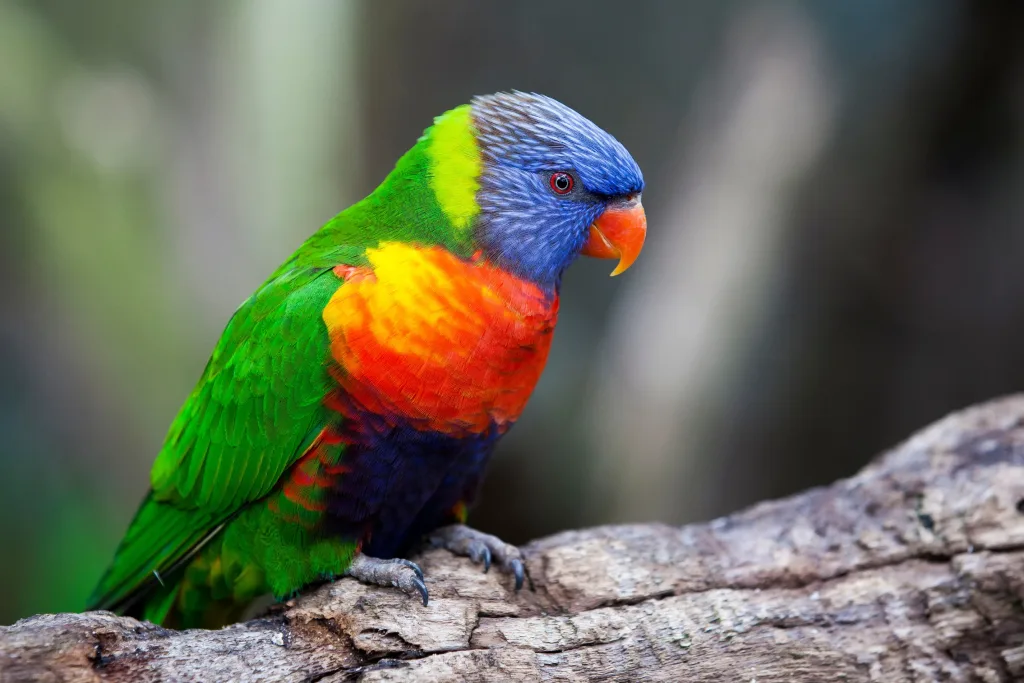
There are moments in nature when colors seem to collide in perfect harmony, leaving anyone who sees them speechless. One of those moments is when you come across a Sunset Lorikeet. With its dazzling mix of hues that look like the sky just after the sun dips below the horizon, this bird easily captivates everyone who lays eyes on it.
Many people who travel to Bali make it a point to see this bird because of its extraordinary charm. Just like the name suggests, the bird’s feathers reflect the warmth, vibrancy, and beauty of a tropical sunset.
Introduction to Sunset Lorikeet

When people see the Sunset Lorikeet for the first time, they’re often amazed. This bird looks like a living sunset, with bright orange, yellow, red, and green feathers that shine under the light.
The Sunset Lorikeet is a subspecies of the Coconut Lorikeet, known for its fiery shades and cheerful personality. Its colors resemble the sky at dusk, which is how it got its name.
At Bali Bird Park, visitors can meet this stunning bird up close and even feed it. It’s a favorite among travelers because it captures both the beauty and spirit of the tropics. Unlike most parrots, the Sunset Lorikeet has special traits that make it stand out and reveal nature’s endless creativity.
Family and Classification

The Sunset Lorikeet is part of the parrot family, Psittaculidae, and belongs to the Trichoglossus genus. This group includes many colorful lorikeets found in Southeast Asia and the Pacific.
Compared to its relatives like the Olive-headed Lorikeet or Biak Lorikeet, the Sunset Lorikeet stands out with its bright, glowing plumage.
Lorikeets are special because of their brush-like tongues. These tiny bristles help them sip nectar and collect pollen from flowers. This adaptation makes them important pollinators and vital to their ecosystems.
Physical Characteristics

At first glance, the Sunset Lorikeet looks like a flying rainbow. Its chest glows in shades of orange and red, while its wings shine in green and blue.
The bird is about 25–30 centimeters long, making it medium-sized. Its long tail and curved orange beak add elegance to its look.
Its eyes reflect intelligence and curiosity, showing its playful nature. Compared to the Scarlet-breasted Lorikeet, this species has a softer balance of warm and cool tones a perfect mix of color and charm.
Habitat and Distribution

The Sunset Lorikeet lives in tropical regions filled with flowers and fruit trees. It thrives in rainforests and coastal woodlands, mainly in Indonesia and Papua. These areas give the bird everything it needs — nectar, shelter, and space to fly freely.
You can often find them in small flocks, moving quickly from one tree to another. They love places rich in blossoms because nectar is their main food source. In the wild, they sometimes share the same forests with other lorikeets such as the Mindanao and Pohnpei Lorikeet.
At Bali Bird Park, people can see the Sunset Lorikeet without needing to travel deep into the jungle. This helps more visitors appreciate its beauty while also learning about conservation.
Behavior and Diet

Sunset Lorikeets are highly active during the day. They move in flocks, flying swiftly from tree to tree in search of nectar and fruit. Their flight is strong, fast, and often accompanied by loud, chattering calls that can be heard from a distance.
Social by nature, they spend most of their time in pairs or groups. You’ll rarely see a lone Sunset Lorikeet because they thrive in company. Their playful interactions include chasing each other mid-air, hopping from branch to branch, and even engaging in what looks like “talking” among themselves.
Their diet is as colorful as their feathers. Nectar and pollen form the bulk of their meals, but they also enjoy soft fruits like papaya, figs, and bananas. Occasionally, they might snack on insects, but that’s a smaller part of their diet. Thanks to their feeding habits, they play a crucial role in pollination, helping plants reproduce and keeping ecosystems balanced.
In comparison, the Coconut Lorikeet, a close relative, shares the same nectar-feeding lifestyle, but the Sunset Lorikeet’s patterns are often more localized to specific areas in Papua. This makes them even more precious in terms of biodiversity.
Conservation Status

Like many exotic birds, the Sunset Lorikeet faces several challenges in the wild. According to the IUCN Red List, this bird (Trichoglossus forsteni), also known as the Scarlet-breasted Lorikeet, is officially classified as Endangered (EN). Current estimates suggest that there are only approximately 500–1,500 mature individuals remaining in the wild, and their numbers continue to decline.
Main threats include:
Deforestation – Forests are being cleared for farming and logging.
Illegal trade – Their beauty makes them targets for the pet market.
Climate change – Changing weather affects flowering and food availability.
Conservation programs focus on protecting forests and stopping illegal trade. Organizations like Bali Bird Park and the World Parrot Trust help raise awareness and support breeding programs to ensure their survival.
Interesting Facts about the Sunset Lorikeet

There are plenty of fun facts about this bird that make it even more fascinating:
- Their tongues are specially adapted like brushes to sip nectar.
- They can recognize human voices and sometimes mimic simple sounds.
- They can live up to 20 years in captivity if properly cared for.
- Their social behavior includes “allopreening,” where they groom each other’s feathers as a sign of bonding.
Compared to the Olive-headed Lorikeet, which tends to be more subdued in interaction, the Sunset Lorikeet is playful and attention-seeking. This is part of the reason they are such a hit with park visitors and bird lovers.
See the Sunset Lorikeet at Bali Bird Park

If you plan to visit Bali, don’t miss the chance to meet the Sunset Lorikeet at Bali Bird Park. The park is home to hundreds of exotic birds from Indonesia and around the world.
Here, guests can walk through tropical gardens, watch free-flight shows, and take photos with colorful lorikeets. It’s a fun and educational experience that connects people to nature.
Bali Bird Park’s mission goes beyond entertainment it promotes conservation, education, and love for wildlife.
So when you visit, take a moment to watch this glowing bird up close. With colors that mirror a tropical sunset, the Sunset Lorikeet is a reminder of nature’s unmatched creativity and beauty.