When people think about dangerous animals, they often imagine lions, sharks, or snakes. Birds? Not so much. But surprisingly, the world’s most dangerous bird isn’t just some large feathered creature flapping in the wind, it’s a creature with deadly power, speed, and survival instincts that might surprise you.
From powerful kicks to sky-high bone-dropping, some birds have defense tactics that could make you rethink that peaceful morning birdwatching session.
Let’s dive deep into the world of birds with attitudes and claws. You’ll learn about the ones you should admire from afar, and why nature has equipped them this way.
7 World’s Most Dangerous Birds

These are not your average songbirds. Each one on this list has earned a spot thanks to their strength, behavior, or surprisingly aggressive tendencies. Let’s take a closer look.
1. Cassowary
Imagine a dinosaur with feathers, that’s pretty much what a cassowary looks like.
Known as the most dangerous bird on Earth, the cassowary is native to the tropical forests of New Guinea and Northern Australia. It stands up to 6 feet tall, has jet-black feathers, and sports a horn-like casque on its head. But don’t be fooled by its exotic looks—this bird is built like a tank with legs.
What makes it dangerous?
- Sharp claws: Cassowaries have a dagger-like claw on each foot, up to 5 inches long.
- Powerful legs: One well-placed kick can cause deep wounds or even be fatal.
- Aggressive nature: Especially if it feels threatened or cornered.
There have been documented cases of cassowary attacks on humans, especially when people try to feed or approach them. In most cases, these birds just want to be left alone. But if provoked, they won’t hesitate to defend themselves with force.
So, why is the cassowary the most dangerous bird? It’s not just the claws or the kick. It’s the combination of speed (up to 50 km/h), agility, and a total lack of fear that makes the cassowary a bird you don’t want to meet in a forest trail.
2. Ostrich
The ostrich is the largest living bird in the world. Native to Africa, it might look goofy with its long neck and big eyes, but don’t let its silly face fool you.
Here’s why it’s on this list:
- Speed: Can run up to 70 km/h—faster than most animals.
- Powerful kick: One strong kick can seriously injure or kill a predator.
- Protective instincts: Especially during the nesting season.
Male ostriches become extra aggressive when guarding their territory or protecting their young. They don’t attack for fun, but if you come too close, be prepared for a chase or worse.
They usually use their strong legs to deliver forward kicks, aiming for the predator’s head or chest. In the wild, they’ve taken down lions and hyenas. Imagine what that could do to a human.
3. Southern Giant Petrel
Nicknamed “stinkers” by sailors, the Southern Giant Petrel might not look threatening from afar. But when food is involved, these birds are not afraid to fight for it.
Found in Antarctic regions, these scavenger birds feed on carcasses and are known to:
- Rip open dead seals and whales.
- Attack injured penguins and other seabirds.
- Fight each other aggressively over food.
What makes them a concern is their strong, hooked beak, built to tear flesh. They don’t usually interact with humans, but in wildlife research zones, there are warnings about staying clear when they’re feeding.
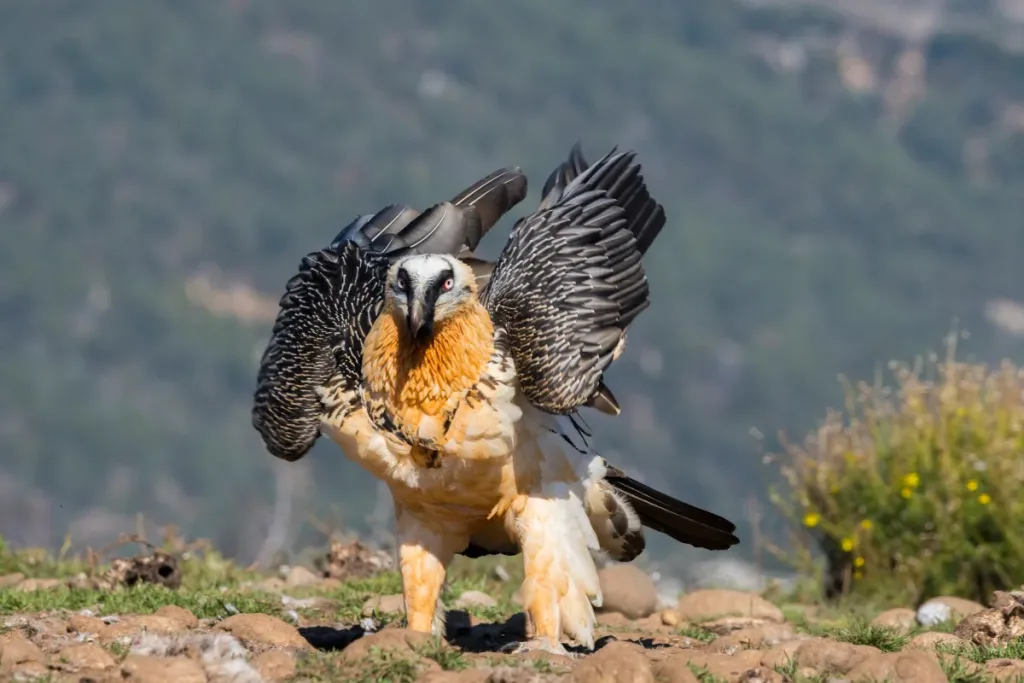
4. Lammergeier (Bearded Vulture)
With a wingspan that can reach nearly 3 meters, the Lammergeier is a breathtaking sight. It mostly inhabits high mountainous regions, such as the Himalayas or the Alps. But don’t be fooled by its majestic appearance.
The Lammergeier feeds mainly on bone marrow. And how does it get to the marrow?
- Picks up bones.
- Flies hundreds of feet in the air.
- Drops the bones onto rocks to shatter them.
This strategy works, but it’s also what makes them dangerous. A large bone falling from the sky is not something you want to be under. While they don’t typically attack humans, there have been stories of shepherds and climbers getting hurt due to falling bones.
5. Barred Owls
Owls are usually seen as mysterious and wise. But the Barred Owl isn’t just a symbol of the forest—it’s a real threat if you disturb it during the wrong time.
Barred Owls are:
- Extremely territorial, especially during nesting.
- Silent in flight, making them hard to detect.
- Equipped with razor-sharp talons and a strong grip.
There have been documented attacks on humans, especially joggers or hikers passing too close to their nests. Victims report being scratched or hit in the head from behind with no warning.
6. Mute Swan
Don’t be deceived by the elegance of the Mute Swan. Yes, they glide across lakes like ballerinas. Yes, they’re symbols of love in many cultures. But get too close to their babies and you’ll see another side.
Mute Swans are:
- Extremely protective parents.
- Known to attack intruders, including humans, dogs, and even boats.
- Capable of breaking bones with their wings in extreme cases.
Swans have been seen flying at full speed toward kayaks or small boats. Their wings can span up to 2.5 meters, and they’ll beat them furiously to drive away anything they see as a threat. That includes humans who just wanted to take a photo.
They don’t usually cause death, but they can cause panic, capsizing, or serious injury if ignored.
7. Red-tailed Hawk
You might’ve seen one circling above your neighborhood or perched on a lamppost. The Red-tailed Hawk is common in North America and known for its piercing scream.
It usually avoids humans, but during nesting season, all bets are off.
This bird is:
- Highly territorial.
- Known to dive at humans, especially in suburban areas.
- Armed with sharp talons and serious focus.
If you unknowingly walk near a nest, it might swoop down, claws out, and aim for your head. Most attacks are quick warnings, but they can cause bleeding and panic. The hawk isn’t trying to kill, it’s just protecting its young.
Why Some Birds Become Dangerous

It might seem strange that a swan or owl could be aggressive. But there’s usually a reason behind the behavior. Nature doesn’t act without purpose.
Here’s why birds might become dangerous:
- Self-defense: They protect themselves if they feel threatened.
- Territorial instinct: Many birds guard their nests with fierce determination.
- Protection of offspring: Like any parent, they’ll fight for their young.
- Human interference: Feeding or trying to touch wild birds often provokes attacks.
So, what is the most dangerous flying bird in the world? It’s a tough question. The cassowary can’t fly, but among those who can, some hawks or vultures might earn that title depending on the situation.
But remember: these birds are not evil. They’re just acting on instinct. They’re survivors in a wild world, using the tools evolution gave them.
Meet Them All at Bali Bird Park
Curious to see these powerful creatures up close? You don’t need to travel to Antarctica or dodge cassowaries in the rainforest. At Bali Bird Park, you can meet all these birds in a safe, educational environment.
- See the cassowary in its natural habitat and learn why it’s so feared.
- Watch the ostrich run and kick in a controlled space.
- Learn about Barred Owls’ behavior from expert keepers.
- Marvel at the soaring flight of the Lammergeier and discover its bone-breaking habit.
Whether you’re a bird lover or just curious, Bali Bird Park offers the chance to understand these birds better, without the risk of being attacked in the wild.
So, next time someone asks you about the world’s most dangerous bird, you’ll know exactly what to say, and more. From the thick jungles of New Guinea to quiet parks near your home, these birds prove that sometimes, danger comes with feathers.